
ERGOFLOWERASMUS MC 2022
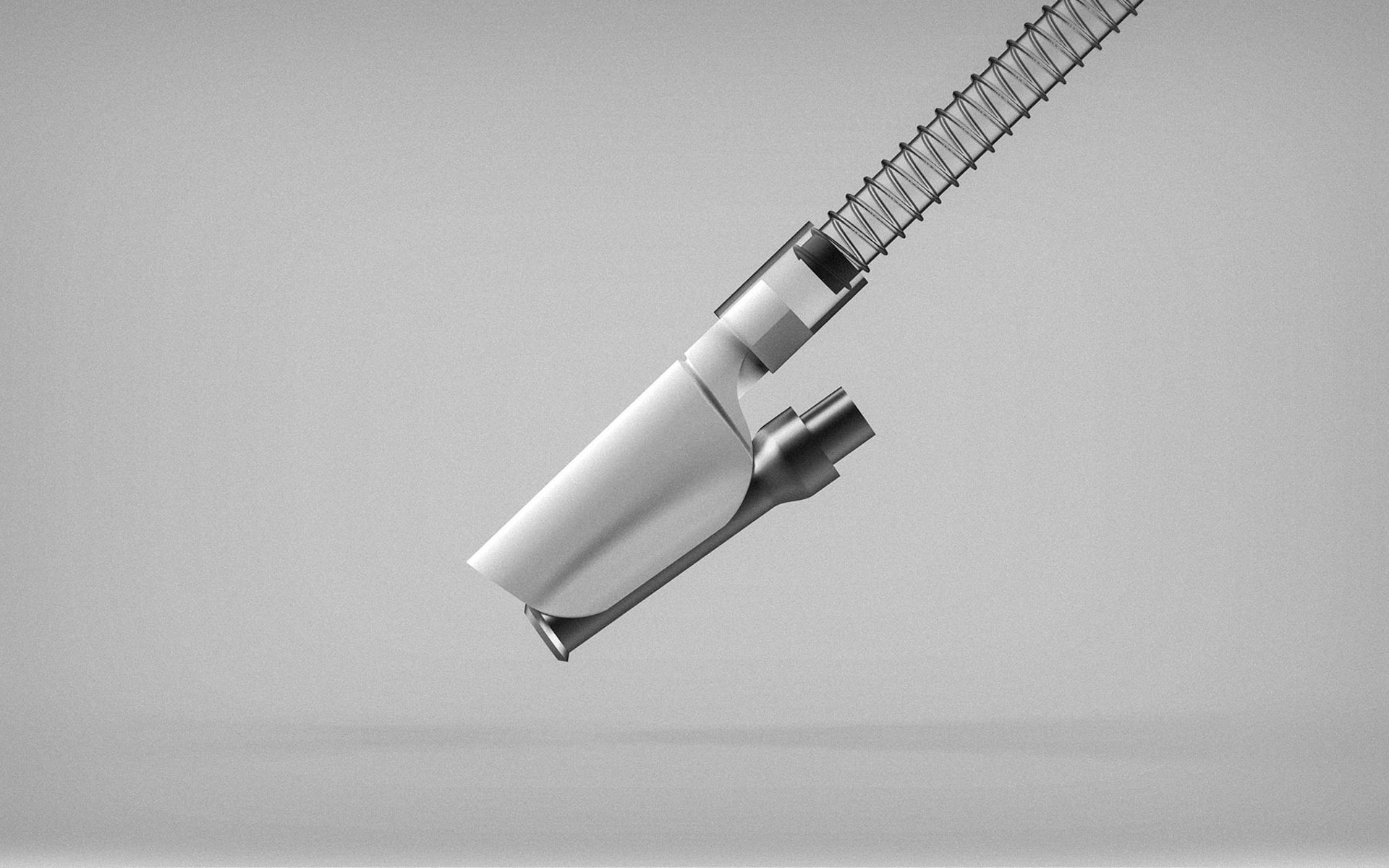
Hospital staff currently experience significant work pressure. As a designer, I have the potential to address this issue, and I have done so by collaborating with a team on the ErgoFlow. A product designed to better protect the physician from toxic substances and, above all, enhance the experience of performing laser treatments.
01.
Project Start
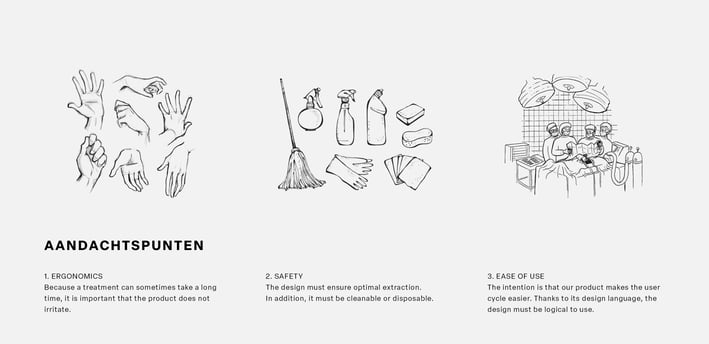
After thorough research into the current challenges of laser extraction in the hospital, a desired situation has been formulated. To ensure the verifiable achievement of this desired situation, requirements have been established. These have been converted into principals and presented to various stakeholders.
02.
Design
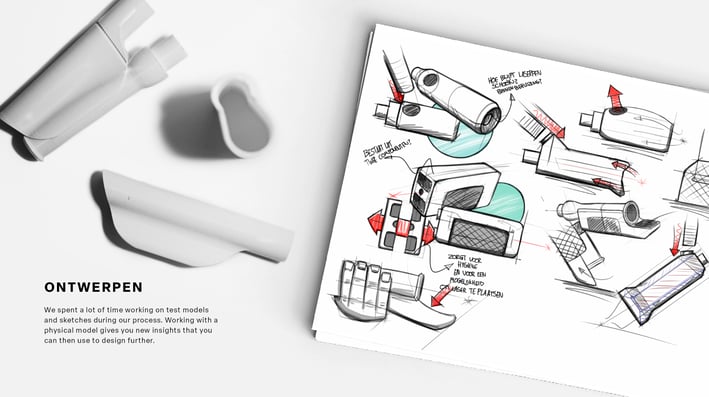
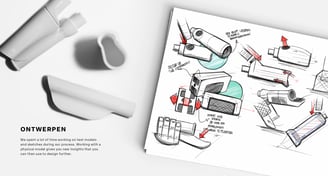
Transforming principles into a feasible product requires a substantial design effort. The product's size works to its advantage, facilitating swift testing with (**mock-up**) models after a few initial sketches. These models are tested and compared against the requirements, yielding insights that inform a new design iteration towards the final product.
03.
Final Product
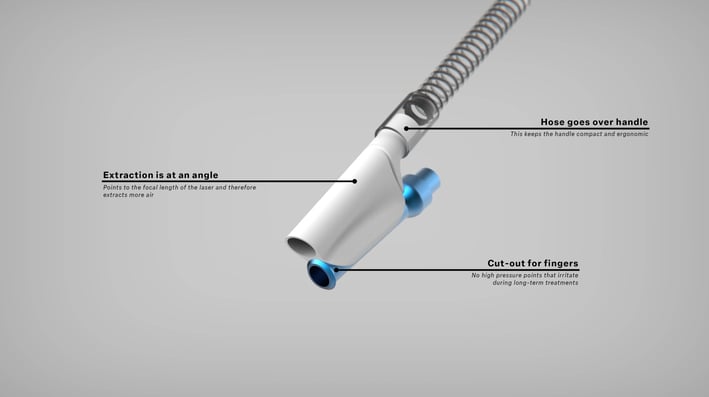
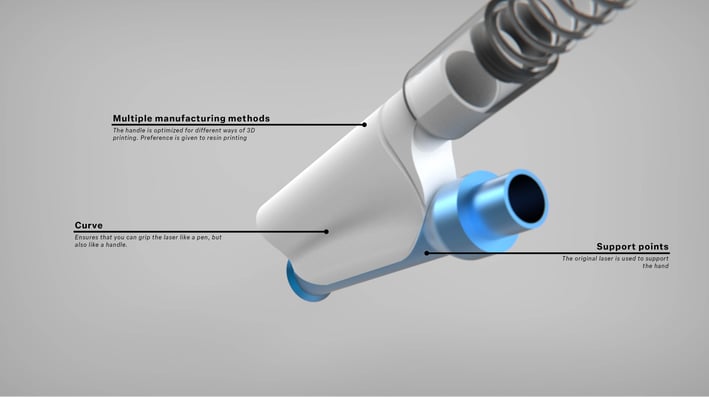
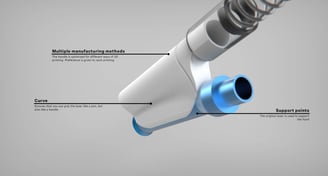
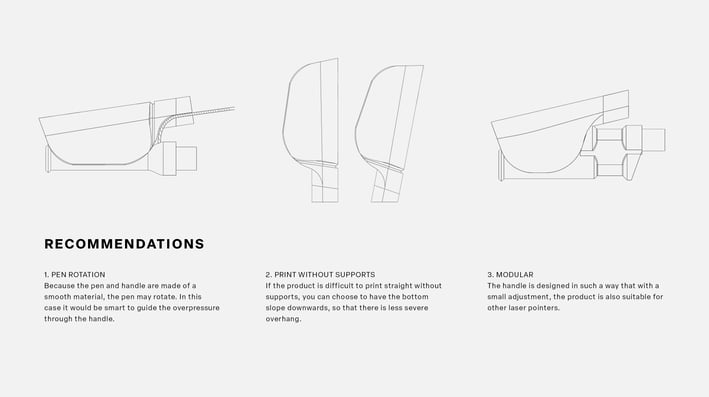
After a 4-month process, a final design has been achieved. This implies that the design must be producible, functional, and safe. Furthermore, the requirements have been fulfilled to the best extent, validated by a substantial number of user tests. As a designer, satisfaction is derived from the final design, and there is confidence that, through the dedication of the design team, it closely aligns with the desired situation.